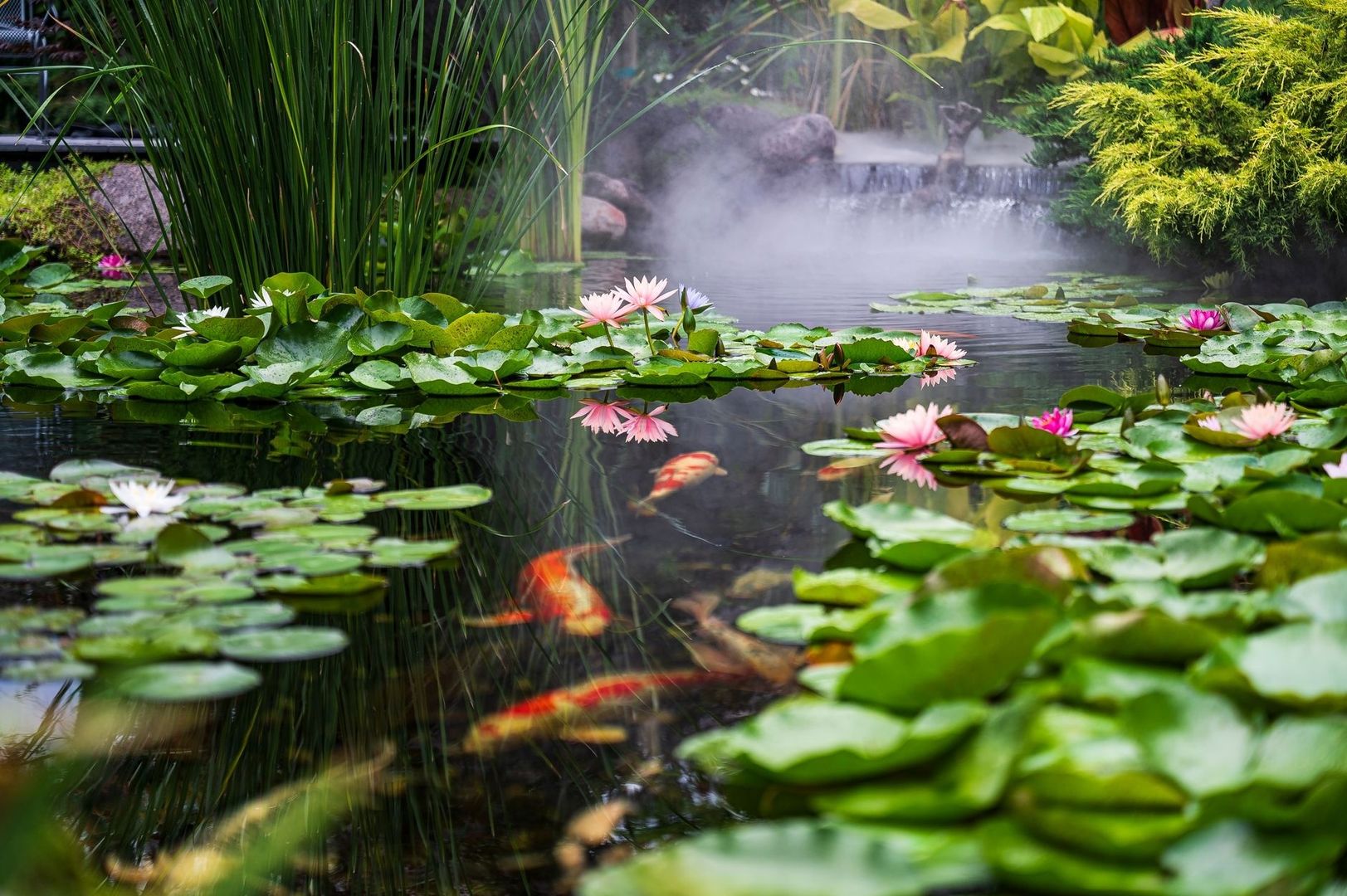
How to Build a Self-Sustaining Nitrogen Cycle in Your Backyard Pond (Without Bottled Chemicals)
The Biology of Clear Water and Why Bottled Fixes Fall Short
A clear, healthy pond is not created by repeatedly adding clarifiers or liquid “quick-start” bacteria. Those products may produce a short-term change, but they do not remove the underlying causes of poor water quality, such as excessive fish waste, low oxygen, decaying leaves, inadequate filter surface area, or unstable water chemistry. Clarifiers can bind suspended particles temporarily, while bottled bacteria may struggle to survive transport, storage, temperature changes, and the very conditions that caused the pond problem in the first place. Repeated purchases can therefore become an ongoing expense without building a stronger biological system.
The more reliable approach is to treat the pond as a living bioreactor. Water movement, oxygen, temperature, mineral balance, plants, fish, microorganisms, and filter media all work together. Bacteria arrive naturally from dust, rain, plants, sediment, and existing pond surfaces, then establish colonies wherever oxygen and food are available. The objective is not to sterilize the pond or force an instant result, but to create conditions in which useful organisms can colonize and regulate waste continuously.
- Provide generous biological surface area for attached bacteria.
- Maintain reliable circulation and aeration throughout the water column.
- Control fish numbers, feeding, leaf litter, and other organic inputs.
- Allow the nitrogen cycle to mature before expecting a fully stable pond.
This patience-first method takes longer than a chemical treatment, but it creates resilience. Once established, a balanced pond can process daily waste with far less intervention, keeping ammonia and nitrite under control while plants and routine water changes manage the resulting nitrate.
Understanding the Biological Two-Step of Nitrification
Nitrification is the central biological process that protects fish from their own waste. Fish release ammonia through their gills and in their waste, while decomposing leaves, uneaten food, and dead plant material add further ammonia to the water. In sufficient concentrations, ammonia damages gill tissue and interferes with oxygen transport. The first bacterial group, commonly associated with organisms such as Nitrosomonas, uses oxygen to oxidize ammonia and produce nitrite.
Nitrite is less immediately toxic than ammonia under some conditions, but it is still dangerous. It enters the bloodstream through the gills and can reduce the blood”s ability to carry oxygen, a condition often called brown blood disease. A second group of aerobic bacteria, traditionally associated with Nitrobacter and related organisms, converts nitrite into nitrate. Nitrate is considerably less toxic at ordinary pond concentrations and can be absorbed by aquatic plants, diluted through partial water changes, or removed by other mature biological processes.
| Stage | Primary input | Primary output | What the pondkeeper should watch |
|---|---|---|---|
| Ammonia oxidation | Fish waste and decaying organic matter | Nitrite | Rising ammonia followed by detectable nitrite |
| Nitrite oxidation | Nitrite from the first stage | Nitrate | Falling nitrite and gradually increasing nitrate |
| Plant uptake and dilution | Nitrate | New plant growth or lower concentration | Stable readings, healthy plants, and limited algae |
Natural inoculation is often more dependable than refrigerated bottles because local microorganisms can adapt to the pond”s actual temperature, mineral content, oxygen level, and organic load. They settle onto gravel, filter mats, liner surfaces, plant roots, and other wet areas. Bottled products are not necessarily useless, but they cannot compensate for poor habitat. A large dose of bacteria added to a stagnant, oxygen-poor pond will not perform like a well-aerated biological filter.
Healthy cycling is usually visible through testing and observation. Ammonia may appear first, followed by nitrite, and then nitrate as the second bacterial population develops. Water may remain slightly cloudy during early colonization because microbial populations are changing rapidly. Fish gasping at the surface, foul odors, black anaerobic sludge, or sudden losses are not normal signs of progress. Aerobic nitrifying bacteria require consistent environmental support, particularly sufficient dissolved oxygen levels across all pond depths, as explained by the US Environmental Protection Agency”s dissolved oxygen guidance.
Crucial Parameters for Bacterial Colonization
Temperature controls the pace of bacterial growth. Nitrifying communities work most efficiently in warm, oxygen-rich water, although activity continues across a wider range. Below about 50 degrees Fahrenheit, growth slows sharply and may become nearly dormant during cold periods. This is why a pond that appears stable in late summer can behave differently during spring warming. Fish metabolism increases as temperatures rise, while the biological filter may still be rebuilding.
Oxygen is equally important. Nitrifying bacteria are aerobic, so they need oxygenated water flowing across their biofilm. A waterfall can provide useful gas exchange, but it may not oxygenate deep or sheltered areas on its own. Air stones, bottom diffusers, and correctly sized circulation pumps help prevent low-oxygen pockets. The EPA identifies fish gulping, unpleasant odors, unusual water color, and changes in aquatic life as useful warning signs associated with oxygen problems, although these signs should be confirmed with testing rather than treated as proof of a single cause.
- Temperature: expect slower cycling below 50 degrees Fahrenheit and rapid biological demand during warm weather.
- Dissolved oxygen: maintain strong surface agitation and bottom-to-top circulation, especially in stocked ponds.
- pH: aim for stability rather than chasing a particular number. Sudden swings place fish and bacteria under stress.
- Hardness and alkalinity: adequate carbonate buffering helps prevent pH collapse as nitrification consumes alkalinity.
- Ammonia and nitrite: both should remain at zero in a mature fish pond. Any detectable reading requires reduced feeding and investigation.
- Nitrate: track its trend. A gradual increase can confirm that nitrification is occurring, while plants and partial water changes keep it manageable.
Water hardness and alkalinity deserve particular attention. Nitrification uses carbonate compounds, so a poorly buffered pond can experience a falling pH as bacteria process waste. Ammonia toxicity is also influenced by pH and temperature. At higher pH and warmer temperatures, a greater proportion of total ammonia exists in the more toxic un-ionized form. Stable readings are therefore more valuable than isolated measurements, and a basic test log can reveal problems before fish show stress.
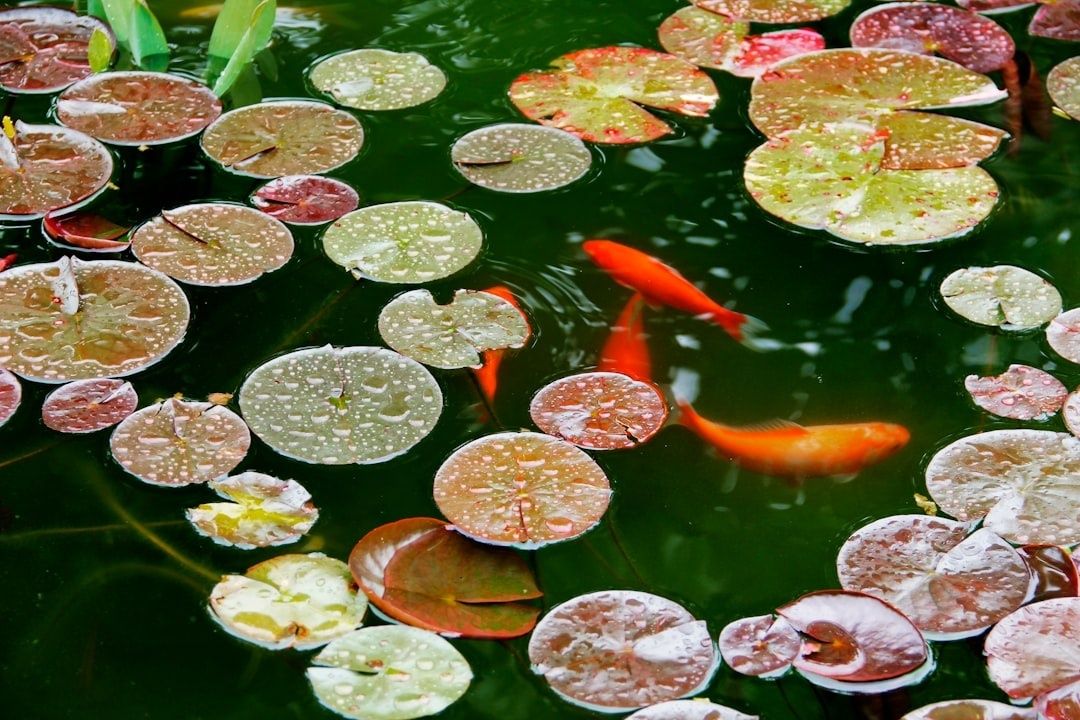
Four Stages of Natural Cycling from Day One to Maturity
A new pond should be managed as an immature biological system, even when the water looks clear. Clear water can still contain dangerous ammonia, and a clean-looking filter may not yet have enough established biofilm to process fish waste. Test ammonia, nitrite, nitrate, pH, and temperature regularly during the first two months. If fish are present, stocking should be light, feeding should be conservative, and aeration should run continuously.
The timeline varies with temperature, pond volume, filter design, fish load, and the amount of biological media available. A new system commonly takes four to six weeks to cycle, while full maturity may require roughly 60 to 80 days. Resist the temptation to correct every early reading with multiple products. Immediate action is still necessary when fish are in danger, but the first responses should usually be increased aeration, reduced feeding, removal of decaying material, and partial water replacement with properly conditioned water.
- Days 1 to 7: Natural decay begins. Small amounts of organic material provide food for decomposers, while bacteria from the surroundings begin settling on wet surfaces. Avoid adding a full fish load at this stage.
- Weeks 2 to 4: Ammonia commonly rises as waste accumulates faster than the new colony can process it. Test frequently, feed sparingly, remove debris, and use partial water changes if ammonia becomes detectable or fish show stress.
- Weeks 4 to 8: Nitrite conversion becomes more noticeable. Ammonia should begin falling, while nitrite may temporarily peak before the second bacterial community catches up. Maintain oxygen and avoid washing biological media in chlorinated tap water.
- Days 60 to 80 and beyond: A mature system should show consistently undetectable ammonia and nitrite, controlled nitrate, stable pH, and clear water without repeated chemical correction. Continue testing because maturity does not protect against sudden overloads.
Do not add fish simply because the pond has reached a calendar milestone. Test results matter more than the date. New fish should be acclimated gradually, especially when transport water differs significantly in temperature or pH. Floating the container to equalize temperature, followed by gradual mixing with pond water, reduces shock. Never pour transport water into the pond, because it may contain concentrated waste and altered carbon dioxide levels.
Physical Benchmarks and Botanical Filtration Architecture
Biological filtration works best when bacteria have abundant protected surfaces. Porous lava rock, appropriately sized gravel, filter mats, brushes, and purpose-made media all provide attachment points. The media should be arranged so water passes through it without clogging immediately. Fine mechanical pads belong where they can be removed and rinsed, while biological media should receive oxygenated water and be disturbed as little as possible.
Plants extend the filtration system beyond the filter box. Fast-growing marginal plants, floating plants used in moderation, and submerged oxygenating plants absorb nutrients, provide shade, and create habitat for small organisms. Plants should not cover the entire surface because excessive coverage can restrict gas exchange at night. A sensible target is partial shade during the brightest part of the day, with enough open water for observation and oxygen transfer.
- Use a skimmer or net to remove leaves before they sink and decompose.
- Place air diffusers where they improve circulation without creating a strong current that exhausts fish.
- Keep pump intakes clear and size circulation to move the pond water regularly.
- Use stepped or graded gravel zones to increase habitat while preventing compacted, oxygen-poor sludge.
- Trim dying plant material and remove yellowing leaves before they return nutrients to the water.
Good aeration should create steady movement rather than violent turbulence everywhere. Bottom diffusers lift low-oxygen water toward the surface, where gases can exchange with the atmosphere. This also reduces thermal layering and helps prevent stagnant pockets along the bottom. As described by Metroparks Toledo”s pond management account, aeration supports fish, encourages nutrient-processing bacteria, releases unwanted gases, and helps reduce accumulated muck.
Several visual benchmarks indicate that the system is operating well: fish remain active without persistent surface gulping, the pond has an earthy rather than rotten odor, water movement reaches sheltered areas, filter media develops a brown biofilm, and plants produce steady new growth. Some algae is normal, particularly during warm bright weather. The goal is not a sterile pond, but a system where algae does not dominate because nutrients, light, oxygen, and biological demand remain in balance.
Sustaining Your Self-Regulating Pond for Years to Come
An established nitrogen cycle still needs protection. During spring, begin testing as water warms and fish become more active. Increase feeding gradually rather than moving immediately to a summer ration. Check pumps, air lines, and filter flow before the pond”s biological demand rises. In autumn, remove leaves with a net, maintain skimming, and clear heavy debris before it settles into deep sludge. A small amount of organic matter supports natural life, but a thick layer of decaying material can overwhelm oxygen and filtration.
Filter maintenance should preserve, not erase, the biofilm. Rinse mechanical pads as needed, but clean biological media gently in a container of removed pond water if flow is restricted. Chlorinated tap water can damage established bacterial colonies. Avoid overfeeding, sudden large fish additions, excessive plant removal, and abrupt pH changes. If ammonia or nitrite appears, reduce the source of waste first, increase aeration, test daily, and perform measured partial water changes when fish safety requires them.
- Feed only what fish consume promptly, and reduce feeding during cold weather.
- Inspect aeration and circulation equipment at the start of every season.
- Keep a simple record of pH, ammonia, nitrite, nitrate, and temperature.
- Remove dead leaves, uneaten food, and decaying plant matter before they accumulate.
- Stock conservatively, because every additional fish increases oxygen demand and waste production.
The reward is a pond that becomes easier to manage with time. Instead of fighting symptoms with recurring chemicals, the pondkeeper supports the organisms that perform the work every day. Clear water then becomes the visible result of sound design, steady oxygen, sensible stocking, healthy plants, and patience through the maturation process. A self-regulating pond is not maintenance-free, but its routine is predictable, economical, and far more durable than any quick fix.